 Plastering is one of those essential skills for DIY enthusiasts and homeowners alike. Whether you’re repairing a wall, creating a smooth finish, or even crafting decorative textures, knowing how to mix plaster correctly is the foundation for success. In this guide, we’ll walk you through the process, from selecting the right materials to achieving a perfect, lump-free mix.
What You’ll Need For Mixing Plaster
Before you start, gather the following materials and tools:
- Plaster powder (gypsum plaster, lime plaster, or ready-mix plaster)
- Clean water
- Mixing bucket
- Trowel or mixing stick
- Electric mixer (optional but helpful for larger batches)
- Measuring cup
Tip: Always check the plaster packaging for manufacturer-specific mixing ratios. Different types of plaster may require slightly different amounts of water.
Step 1: Prepare Your Workspace
Plaster can be messy, so cover floors and furniture with a drop cloth or plastic sheeting. Make sure your mixing bucket is clean and free of debris to prevent lumps.
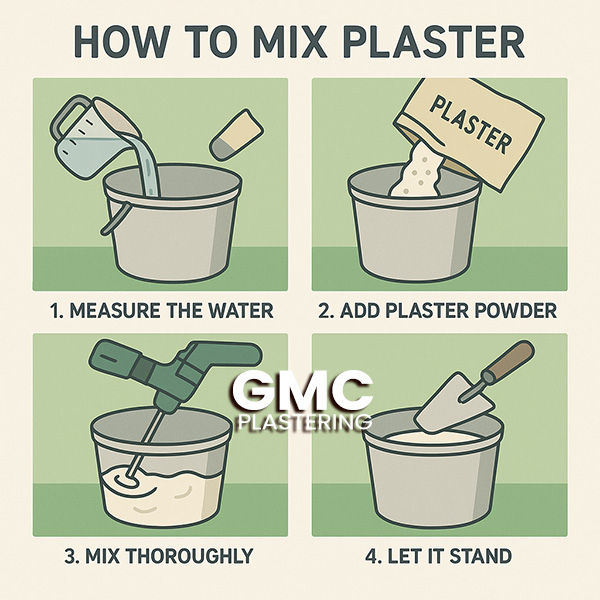
Step 2: Measure the Water
Start by pouring the recommended amount of clean, cool water into your mixing bucket. Using too much or too little water can affect the plaster’s consistency and drying time.
Step 3: Add Plaster Powder Gradually
Sprinkle the plaster powder slowly into the water. Avoid dumping it all at once; adding it gradually helps prevent lumps from forming. Let the powder absorb water for a few minutes — this is called slaking and ensures a smoother mix.
Step 4: Mix Thoroughly
Use a trowel, mixing stick, or electric mixer to stir the plaster. Mix until you get a smooth, creamy consistency without lumps. The plaster should be thick enough to hold its shape on the trowel but still workable.
Tip: If the plaster seems too thick, add a small amount of water gradually. If it’s too runny, sprinkle in a little more plaster powder.
Step 5: Let It Stand (Optional)
Some plaster types benefit from resting for a few minutes before application. Check your plaster’s instructions to see if this step is recommended.
Step 6: Apply Immediately
Plaster sets quickly, often within 20–30 minutes. Apply it to your wall or ceiling promptly to ensure it spreads smoothly and adheres well.
Troubleshooting Common Issues
- Lumps: Usually caused by adding powder too quickly or not mixing enough. Sift the powder before adding it to water next time.
- Cracking: Can occur if the plaster dries too fast. Keep the area slightly damp or work in smaller sections.
- Too runny: May be caused by too much water. Adjust the mix gradually.
Final Tips
- Always wear protective gloves and a mask when mixing plaster to avoid skin irritation and inhalation of dust.
- Clean your tools immediately after use; plaster hardens fast and can ruin brushes and trowels.
- Practice on a small area first if you’re new to plastering — getting the right consistency takes experience.
Mixing plaster might seem intimidating at first, but with the right technique, it’s straightforward and satisfying. Once you master a smooth, workable mix, your walls and projects will look professional and flawless.
Call NOW for FREE quote!